U.S. Parents: REED, Consent, Free Meeting Plan for IEP Reevaluation

Before your child’s IEP reevaluation, collect existing records, list two or three top priorities, and decide what new assessments you want the IEP team to consider. Review the meeting notice for proposed evaluation areas and attendees, gather recent school and home observations, and write down the outcomes you want addressed so you walk into the meeting ready instead of reacting.
TL;DR:
- The reevaluation process mostly starts with reviewing existing data, and new testing is only necessary if the team determines current information is insufficient.
- Parents have the right to refuse consent for specific assessments, and they can request an independent evaluation at public expense if dissatisfied with school evaluations.
- Preparation involves gathering recent work, observations, and an observation summary, and sharing draft evaluation ideas in advance to ensure an effective meeting.
- Reevaluations are triggered by age, requests from parents or teachers, or significant performance changes, and timing varies based on district policies beyond the federal three-year minimum.
- A well-organized meeting plan, including clear priorities and questions, helps ensure a productive evaluation review and follow-up.
Table of Contents
- What is an IEP reevaluation and why does it matter?
- When reevaluations happen and what triggers one
- What happens during the reevaluation process
- Your reevaluation preparation checklist
- Know your rights: notice, consent, and independent evaluations
- Making the most of the meeting and the follow-up
- Turning this checklist into a working plan with IEPful
- Start your free meeting plan today
- Key IDEA regulations and parent resources
- Sources
- FAQ
What is an IEP reevaluation and why does it matter?
A reevaluation is the process schools use to decide whether your child still qualifies for special education and whether the current services still match their needs. Under IDEA’s reevaluation rule, districts must revisit eligibility and support levels on a regular basis rather than leave an IEP unchanged year after year.
There are two main paths. A triennial reevaluation happens automatically on a set schedule. A parent or teacher requested reevaluation happens when someone on the team believes something has changed, whether that is new struggles in class or clear progress that suggests less support is needed.
Either way, the process starts with a review of existing data, often called a REED, not with new testing. The team looks at what is already known before deciding whether additional assessments are actually necessary. That distinction matters because many parents assume “reevaluation” automatically means their child will sit through a new round of testing, and that is not always true.

When reevaluations happen and what triggers one
IDEA sets a floor: a public agency must reevaluate a child with a disability at least once every three years unless the parent and the school agree it is not needed. Reevaluations generally cannot happen more than once a year without both sides agreeing, though there is no ceiling on how many times a year a reevaluation can occur if everyone agrees it is warranted.
Common triggers include a parent or teacher request, a significant change in academic or behavioral performance, or a proposed exit from special education services entirely. Your child’s current IEP or the district’s evaluation records should list the reevaluation due date. State and district timelines can add stricter deadlines on top of the federal minimum, so check your child’s paperwork or ask the case manager directly rather than assuming the three year mark applies exactly.
What happens during the reevaluation process
The review of existing evaluation data, or REED, is the actual starting point. The team, which can include you, looks at current classroom performance, prior test results, teacher input, and any information you provide to decide whether the existing picture is enough or whether new assessments are needed. No parental consent is required just to conduct this review.

If the team decides new testing is warranted, that changes. Parental consent is required before any new assessment is administered, and you can decline specific tests while still allowing others.
When testing does happen, evaluation procedures require a variety of tools and strategies, not a single test, and the evaluation must be thorough enough to identify every area where your child might need support, from academics to speech, motor skills, or behavior.
The IEP Team typically includes you, at least one general education teacher, a special education teacher, and someone who can interpret evaluation results, such as a school psychologist. You can also invite an outside professional, like a private therapist or tutor, who knows your child well.
Your reevaluation preparation checklist
Good preparation starts a week or two before the meeting, not the night before. Pull together the paper trail and turn it into something the team can actually use in the room.
- Gather recent work samples, current IEP progress reports, and any therapist or doctor notes from the past year.
- Add home observations: what you see with homework, sleep, social behavior, or meltdowns that teachers might not witness.
- Pull attendance and behavior logs if either has shifted noticeably since the last IEP.
- Write a short present levels summary covering strengths, current struggles, and which supports have or have not worked.
- List specific assessment requests tied to observable impacts, such as slow reading comprehension or trouble finishing multi-step tasks, rather than vague concerns.
Once your documents are together, ask the school to send draft evaluation ideas or proposed assessment areas in advance so you have time to react instead of hearing them for the first time in the meeting. Confirm who is attending ahead of time, and bring a printed, organized packet rather than loose papers.
Pro Tip: Decide in advance who will speak first and what they will say. A calm, specific opening sets the tone for the whole meeting.
Know your rights: notice, consent, and independent evaluations
Schools must give you written notice early enough that you have a real chance to attend, and that notice has to include the purpose, time, location, and who will be present. Ask for proposed evaluation procedures in writing before the meeting, not just verbally.
Remember that no consent is needed for the REED review itself, but written consent is required before any new assessment. Refusing consent for a specific test does not automatically halt the whole process, but the school may pursue other steps.
If you disagree with the results, you can request an Independent Educational Evaluation at public expense. The school must either pay for it or defend its own evaluation at a due process hearing.
Making the most of the meeting and the follow-up
Open the meeting with a short, specific statement of your top two or three priorities, then hand over your present levels summary so the team has it in front of them. Ask directly what data supports each recommendation.
- State your priorities in the first minute, then share your written summary.
- Ask what evidence backs each proposed change or service level.
- If new assessments are agreed on, confirm who will administer them and by what date.
- Request timelines and next steps in writing before you leave.
- Ask for the amended IEP in writing and set a follow-up check-in date.
Leaving with dates and names attached to each action item is what turns a meeting into an actual plan instead of a conversation you will half remember in three weeks.
Turning this checklist into a working plan with IEPful
Reading a checklist is one thing. Turning it into a document you can actually bring to the meeting is another. IEPful’s free Plan Builder walks you through the same steps covered here: naming your top priorities, drafting a present levels summary, and generating questions to ask, without requiring an account.
For families who want more structure, an optional paid Complete Meeting Pack adds expanded question sets, printable materials, space for notes during the meeting, and follow-up tracking so nothing gets lost after the meeting ends. You can see how the process works in three steps before deciding whether the free version is enough.
None of this replaces your rights under IDEA or a formal evaluation. It organizes your preparation so you show up ready.
Start your free meeting plan today
You do not need to build a preparation packet from scratch. Visit IEPful’s free meeting plan page, answer a handful of prompts about your child’s needs and your priorities, and print or save the plan it generates quickly and easily.
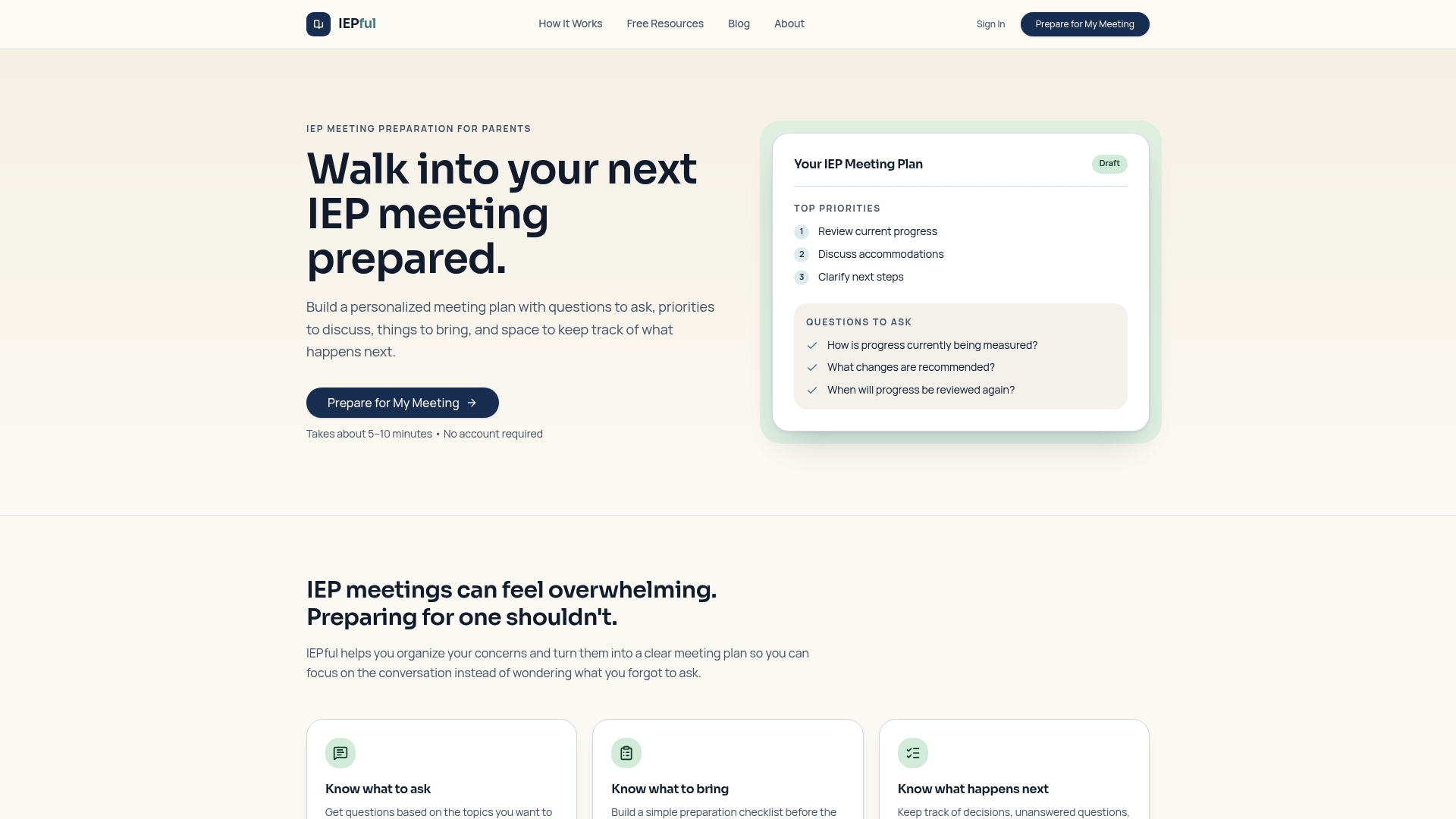
The free plan covers the core preparation steps in this article. The optional Complete Meeting Pack adds printable extras and follow-up tools if you want more. Either way, IEPful organizes your prep. It is not a substitute for legal advice or a formal evaluation, so bring specific questions to your team and consult a special education attorney or advocate for anything that requires individualized legal guidance.
Key IDEA regulations and parent resources
The federal rules behind this guide include 34 CFR 300.303 on reevaluation, 300.304 on evaluation procedures, 300.300 on parental consent, and 300.322 on parent participation. For plain-language explanations, your state’s Parent Training and Information Center, often listed through the Center for Parent Information and Resources, is a reliable next stop.
FAQ
What happens during an IEP reevaluation?
The team first conducts a review of existing evaluation data, called a REED, to decide whether current information is enough or whether new testing is needed. If new assessments are required, the school needs your written consent before testing begins, and results are then discussed at a team meeting.
What not to say during an IEP meeting?
Avoid vague statements like “he’s just lazy” or “she’ll grow out of it,” since they give the team nothing concrete to act on. Stick to specific, observable examples of strengths and struggles, and avoid agreeing to changes on the spot if you need time to review the proposal first.
What are the 13 disabilities for an IEP?
IDEA recognizes specific disability categories that can qualify a child for special education, including autism, specific learning disabilities, speech or language impairment, and other health impairments, among others. Definitions and category names can vary slightly by state, so check your child’s eligibility paperwork for the exact category listed.
What are common reasons for reevaluation?
The most frequent triggers are the three year timeline required under IDEA, a parent or teacher request based on noticeable changes in performance, or a proposed change in eligibility, including exit from services. A sudden shift in behavior, grades, or therapy needs can also prompt a team to request one sooner.
Recommended
Created with BabyLoveGrowth’s AI tools
IEPful provides educational planning and organization information, not legal, medical, or individualized professional advice. Requirements and procedures can vary; verify current information with official sources.